
The Prince, the Sannyasi and the Family That Couldn’t Agree
The Prince, the Sannyasi and the Family That Couldn’t Agree
In 1920, people in Dhaka began noticing a sannyasi who seemed strangely familiar.
He sat in the manner of an ascetic; his body covered in the signs of a wandering religious life. Yet some people thought they recognised something beneath the appearance. A face. A mannerism. Perhaps even the person they remembered.
The sannyasi did not immediately tell them who he was.
That hesitation mattered, because eleven years earlier, a member of one of Bengal’s prominent landed families had reportedly died in Darjeeling.
And now, someone who looked remarkably like him had appeared in Dhaka.
The Family Behind the Mystery
The man at the centre of the story was eventually identified as Ramendra Narayan Roy, the second son of Raja Rajendra Narayan Roy of Bhawal.
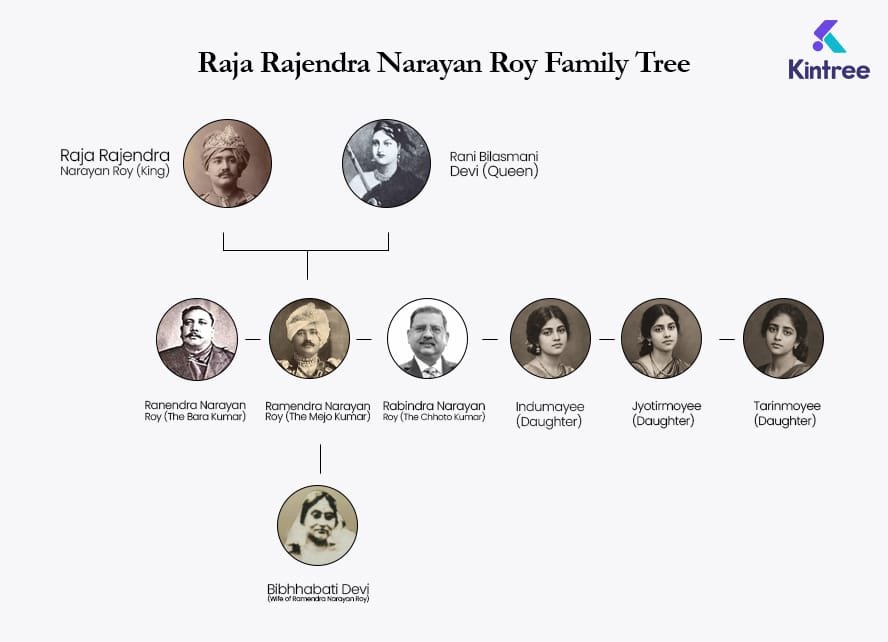
Rajendra died in 1901, leaving three sons and three daughters. His sons were Ranendra Narayan Roy, the Bara Kumar; Ramendra Narayan Roy, the Mejo Kumar; and Rabindra Narayan Roy, the Chhoto Kumar. His daughters were Indumayee, Jyotirmoyee and Tarinmoyee.
The three brothers held the Bhawal estate in equal one-third shares. Ramendra married Bibhabati Devi in 1902 and the couple had no children.
That seemingly straightforward family structure would become important because Ramendra’s reported death affected both his marriage and his share of the estate.
The Death in Darjeeling
In 1909, Ramendra travelled to Darjeeling with Bibhabati, her brother Satyendranath Banerjee and others. He became seriously ill and was reported to have died on 8 May.
His funeral was said to have followed soon afterwards.
Bibhabati returned home as his widow. She subsequently came to possess the widow’s interest in Ramendra’s undivided one-third share, while the Court of Wards later managed the property.
As far as the family was concerned, Ramendra belonged to the past.
But the version of events that later emerged from the sannyasi was very different.
He claimed that he had survived the attempted cremation after being found by ascetics, lost his memory and spent years wandering with them. This was his account, not an established fact at the time.
Then came the stranger in Dhaka.
The Man People Thought They Knew
The sannyasi initially did not claim to be Ramendra.
Instead, recognition developed around him.
People examined his appearance and physical characteristics. Others considered his knowledge of the Bhawal household. Photographs and memories became important. His sister Jyotirmoyee Devi eventually became convinced that the man was her brother.
Bibhabati reached the opposite conclusion.
She refused to recognise him as her husband and maintained that Ramendra had died in Darjeeling. Other people also took opposing positions.
In 1921, the sannyasi publicly identified himself as Ramendra Narayan Roy. In 1922, he was taken to the Bhawal estate.
What had begun as recognition by individuals was becoming a dispute involving an entire family.
And behind that dispute sat a valuable question: if the sannyasi was Ramendra, what happened to the family relationships and property arrangements that had followed his supposed death?
When the Family Dispute Reached Court
In 1930, the claimant filed a suit seeking a declaration that he was Ramendra and possession of his undivided one-third share.
The trial lasted 608 days.
Witnesses discussed his appearance, memories, behaviour and knowledge of the Bhawal household. Photographs, documents, letters and physical characteristics were examined. The court was effectively being asked to reconstruct one person’s identity from fragments preserved by different people.
In 1936, the District Court ruled in the claimant’s favour and declared him to be Ramendra Narayan Roy. The Calcutta High Court later upheld that finding by majority.
The case eventually reached the Privy Council in London. In 1946, the appeal was dismissed, leaving the concurrent finding that the claimant was Ramendra standing.
Legally, the question had been decided.
The family history, however, remained extraordinary precisely because people had remembered the same person so differently.
The Bhawal Sannyasi Family Tree
The immediate Bhawal Sannyasi family tree can be understood through Ramendra’s position within the household:
Raja Rajendra Narayan Roy + Rani Bilasmani
├── Indumayee Devi
├── Jyotirmayee Devi
├── Tarinmoyee Devi
├── Ranendra Narayan Roy, Bara Kumar
├── Ramendra Narayan Roy, Mejo Kumar
└── Rabindra Narayan Roy, Chhoto Kumar
Ramendra was not simply another name on the tree. He was a son, brother, husband and co-sharer of the estate.
That is what made his disputed identity so consequential.
If the sannyasi was Ramendra, then the family relationship at the centre of the story had never ended in 1909. If he was not, the appearance of the claimant represented something entirely different.
The legal case therefore became a remarkable exercise in testing a family relationship through evidence.
What the Case Reveals About Family History
The Bhawal Sannyasi family story shows why family history cannot always be reduced to names and dates.
A family tree can establish that Ramendra was Rajendra’s son and Jyotirmoyee’s brother. It cannot independently establish whether a person who appears decades later is really that same individual.
That requires context and evidence.
In the Bhawal case, those pieces included photographs, documents, physical characteristics, memories and testimony. Some supported the claimant; others became part of the disagreement.
Modern families face much quieter versions of the same problem. One relative may have photographs, another may hold letters, while an older family member remembers a story that never made it into a document.
Without organisation, those fragments can eventually become disconnected from the relationships they explain.
Preserving More Than Names
This is where Kintree fits naturally into the family-history process.
A digital family tree can help organise relationships alongside the photographs, stories and other family information that give those relationships context. Instead of keeping every piece of family history in separate conversations, albums or folders, families can build a clearer view of how generations connect.
The lesson from Bhawal is not that every family needs a courtroom-sized investigation.
It is that names alone rarely tell the whole story.
A family tree shows the connections. The records and stories help explain them.
And in the Bhawal case, one disputed identity was enough to turn those connections into one of the most remarkable family and legal disputes of its era.
FAQs
Who was the Bhawal Sannyasi?
The Bhawal Sannyasi was a religious ascetic who appeared in Dhaka in the early 1920s and eventually claimed to be Ramendra Narayan Roy, the second son of Raja Rajendra Narayan Roy of Bhawal. The courts ultimately found in his favour.
Who was Ramendra Narayan Roy?
Ramendra Narayan Roy was the second son of Raja Rajendra Narayan Roy and was known as the Mejo Kumar. He held an undivided one-third share in the Bhawal estate.
Why did Bibhabati Devi reject the sannyasi?
Bibhabati maintained that her husband had died in Darjeeling in 1909 and did not accept the sannyasi’s claim that he was Ramendra.
Did the courts recognise the Bhawal Sannyasi as Ramendra?
Yes. The District Court ruled that the claimant was Ramendra, the Calcutta High Court upheld that finding by majority and the Privy Council dismissed the appeal in 1946.
Why is the Bhawal Sannyasi family tree significant?
It places Ramendra within the family relationships that made the identity dispute consequential. His position as son, brother, husband and co-sharer connected the identity question to both family relationships and property.
How can I preserve my own family history?
Start by recording relationships you can establish confidently. Then add photographs, documents and family accounts, while clearly distinguishing verified information from memories or unresolved stories. A structured digital family tree can help keep those pieces connected.
Share This Story, Choose Your Platform!
Related Blogs
The Prince, the Sannyasi and the Family That Couldn’t Agree
In 1920, people in Dhaka began noticing a sannyasi....
Unveiling the Legacy: Lord Rama and the Ikshvaku Dynasty
Lord Rama's place in the Ramayana is closely conne....
Akshay Kumar Birthday – Bollywood Actor and His Influencing Family
Akshay Kumar is an Indian Actor and Film Producer ....
The Sompura Family: 15 Generations of Temple Architecture Behind Ram Mandir
A surname can tell you where a family came from. B....