Shah Rukh Khan: How a Delhi Boy Became Bollywood’s Global Superstar
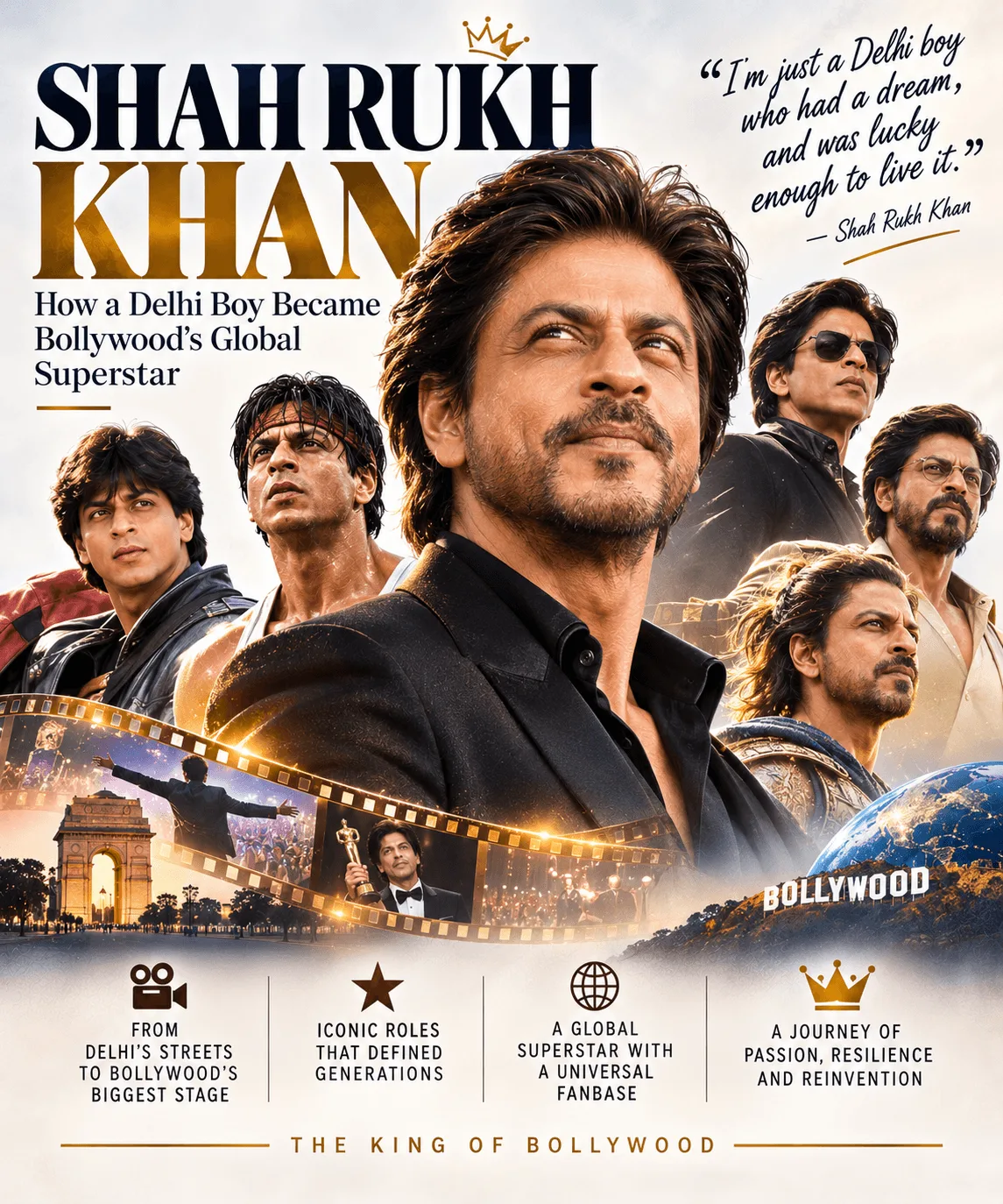
Before Shah Rukh Khan became one of Indian cinema’s most recognisable faces, his story began in New Delhi, far from the glamour of Mumbai’s film studios. Born on November 2, 1965, he grew up in a family with roots connected to the social and political history of the Indian subcontinent. His father, Meer Taj Mohammed Khan, and mother, Lateef Fatima, provided the family background that shaped his early years in the capital.
Khan studied at St. Columba’s School in Delhi, where he developed an interest in sport, public performance and the arts. He later attended Hans Raj College and became associated with Delhi’s theatre circles. That period was important because it gave him experience in performance before cinema offered him a national platform. His move towards acting was not an overnight transformation but a gradual progression through education, theatre and television.
In the late 1980s, Khan appeared in television serials including Fauji and Circus. These programmes introduced him to audiences across India and demonstrated his ability to combine intensity with charm. Television also gave him visibility at a time when Hindi cinema was preparing for a new generation of performers. After moving to Mumbai, he made his film debut in Deewana in 1992.
The early 1990s revealed the range that would become central to his career. Films such as Baazigar and Darr presented him in morally complex and darker roles, while later romantic films established a different screen image. Dilwale Dulhania Le Jayenge, released in 1995, became especially influential. Its story of love, family expectations and cultural belonging resonated with Indian audiences and with the diaspora abroad. The film’s continuing popularity helped make Khan synonymous with the romantic hero for an entire generation.
His success continued through major films including Dil To Pagal Hai, Kuch Kuch Hota Hai, Kabhi Khushi Kabhie Gham, Devdas, Swades, Chak De! India, My Name Is Khan and Chennai Express. These roles allowed him to move between romance, drama, social themes, sports and action. It is important to note that his public image was built not by one kind of performance alone, but by his willingness to take on contrasting characters and cinematic worlds.
Khan also expanded his contribution beyond acting. Together with Gauri Khan, he established Red Chillies Entertainment, a production company involved in film production and visual effects. This helped place him within the wider business and technological ecosystem of Indian cinema. His work has earned major national and international recognition, including the Padma Shri, one of India’s highest civilian honours.
Throughout history, popular artists have become markers of changing social aspirations. Shah Rukh Khan’s career reflects India’s expanding film audience, the rise of global Indian culture and the emotional power of stories centred on family, identity and belonging. For parents and children who have shared his films, his work forms a bridge between different eras of Hindi cinema. In conclusion, Shah Rukh Khan deserves to be remembered not only as a celebrated actor, but also as a lasting part of India’s modern cultural heritage.