
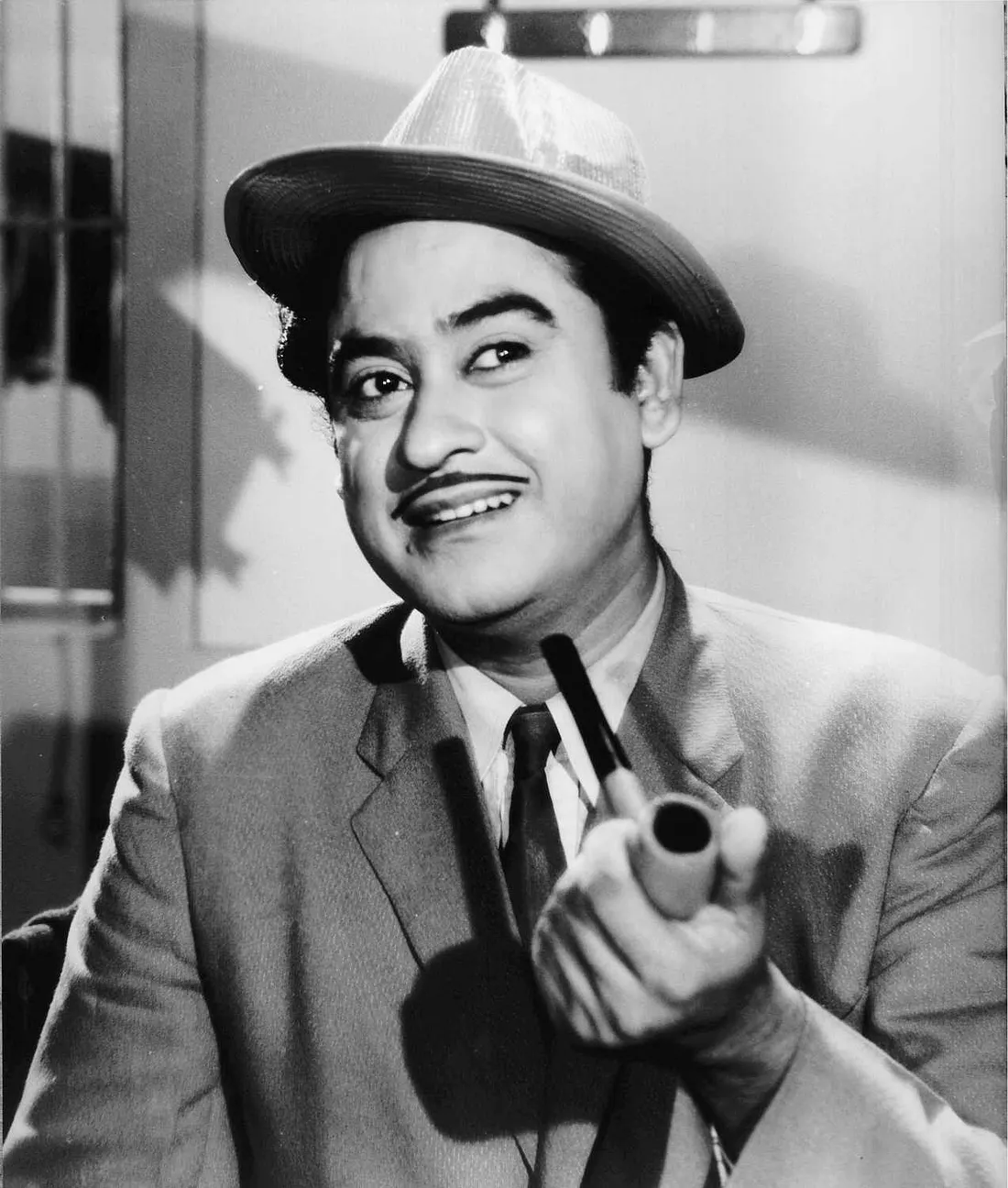
Kishore Kumar: The Voice That Defined an Era of Indian Cinema
In the serene town of Khandwa, Madhya Pradesh, a child was born on August 4, 1929, who would go on to become a household name in Indian cinema. Abhas Kumar Ganguly, later known as Kishore Kumar, was the youngest of four siblings in a Bengali Brahmin family. His father, Kunjalal Ganguly, was a lawyer, and his mother, Gouri Devi, was a homemaker. The Ganguly household was steeped in artistic pursuits, with his eldest brother, Ashok Kumar, already a celebrated actor in the Hindi film industry.
Kishore’s early exposure to the world of cinema was through his brother Ashok, who introduced him to the nuances of acting and music. Despite his family’s artistic inclinations, Kishore initially pursued a different path, focusing on his studies. However, the allure of the silver screen was irresistible. In 1946, at the age of 17, he moved to Bombay (now Mumbai) to join his brother in the film industry.
His entry into playback singing was serendipitous. During a visit to Bombay, Kishore met Khemchand Prakash, a renowned music director, who was impressed by his voice and offered him a song in the film ‘Ziddi’ (1948). This marked the beginning of his illustrious singing career. Over the next four decades, Kishore Kumar’s voice became synonymous with Bollywood’s golden era, recording over 2,500 songs in multiple languages, including Hindi, Bengali, Marathi, and Assamese.
Beyond singing, Kishore was a versatile artist. He acted in 87 films, showcasing his flair for both comedy and drama. His collaborations with legendary composers like S.D. Burman and R.D. Burman produced timeless classics. His yodelling technique and ability to modulate his voice to suit various genres set him apart from his contemporaries.
Kishore’s personal life was as eventful as his professional one. He was married four times: first to Ruma Guha Thakurta, then to the iconic actress Madhubala, followed by Yogeeta Bali, and finally to Leena Chandavarkar. He had two sons, Amit Kumar and Sumit Kumar, both of whom pursued careers in music.
In 1987, the world of Indian cinema mourned the loss of this multifaceted genius. Kishore Kumar’s legacy endures, with his songs continuing to resonate with audiences, and his films remaining a testament to his acting prowess. His life story is a beacon of hope for aspiring artists, illustrating that passion and perseverance can lead to unparalleled success.
This remarkable story serves as a reminder of the rich tapestry of talent that India has produced, and Kishore Kumar’s contributions remain a significant chapter in the annals of Indian cinema.