
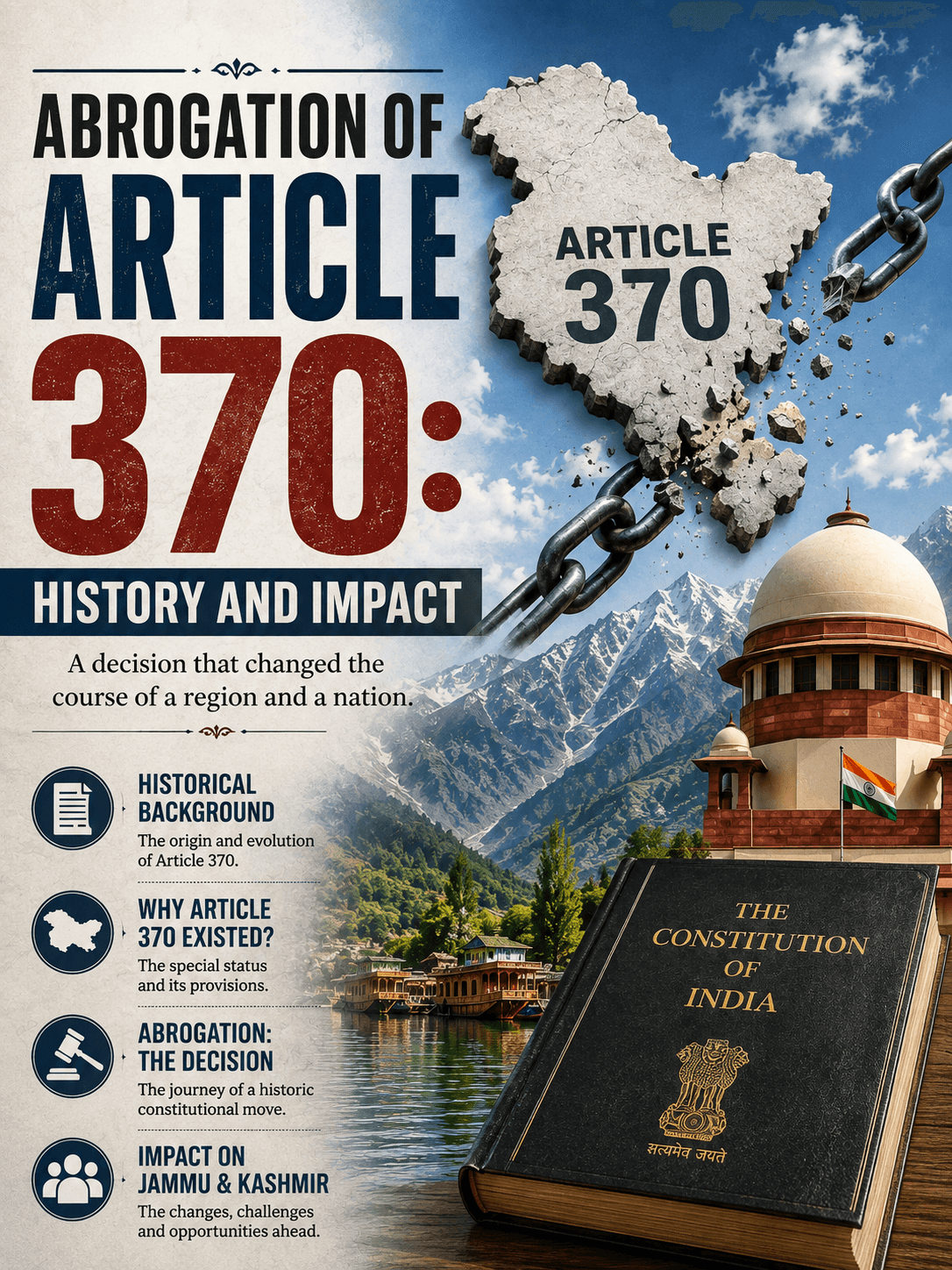
The Day India’s Constitution Changed: Abrogation of Article 370

Published On: August 5, 2026

On August 5, 2019, a historic decision reshaped India's constitutional landscape, ending Jammu and Kashmir's special status and marking a new chapter in the nation's history.

In a landmark move on August 5, 2019, the Indian government abrogated Article 370 of the Constitution, which had granted special status to Jammu and Kashmir since 1949. This provision allowed the state to have its own constitution, flag, and autonomy over most matters except defense, foreign affairs, and communications. The decision was announced by Union Home Minister Amit Shah in the Rajya Sabha, leading to widespread discussions and debates across the country. The abrogation was followed by the passage of the Jammu and Kashmir Reorganisation Act, 2019, which bifurcated the state into two Union Territories: Jammu and Kashmir, and Ladakh. This remarkable story serves as a reminder of India’s evolving political landscape and the complexities involved in constitutional amendments. Delve into the events of that day and understand the implications that continue to shape the region’s future.


Family Tree

Fun Facts

[“Article 370 was initially intended as a temporary provision but remained in effect for over seven decades.”,”The abrogation led to the bifurcation of Jammu and Kashmir into two Union Territories: Jammu and Kashmir, and Ladakh.”,”The decision was announced in the Rajya Sabha by Union Home Minister Amit Shah on August 5, 2019.”,”The move was followed by the passage of the Jammu and Kashmir Reorganisation Act, 2019, on August 9, 2019.”,”The abrogation of Article 370 was a significant event in India’s constitutional history, affecting the region’s autonomy and governance.”]

Disclaimer: 
This Legacy Story is generated using information collected from various sources. Some details may be inaccurate, incomplete, or outdated. Please verify the information before relying on it.