Akshay Kumar: From Bangkok Martial Arts Training to Bollywood Stardom
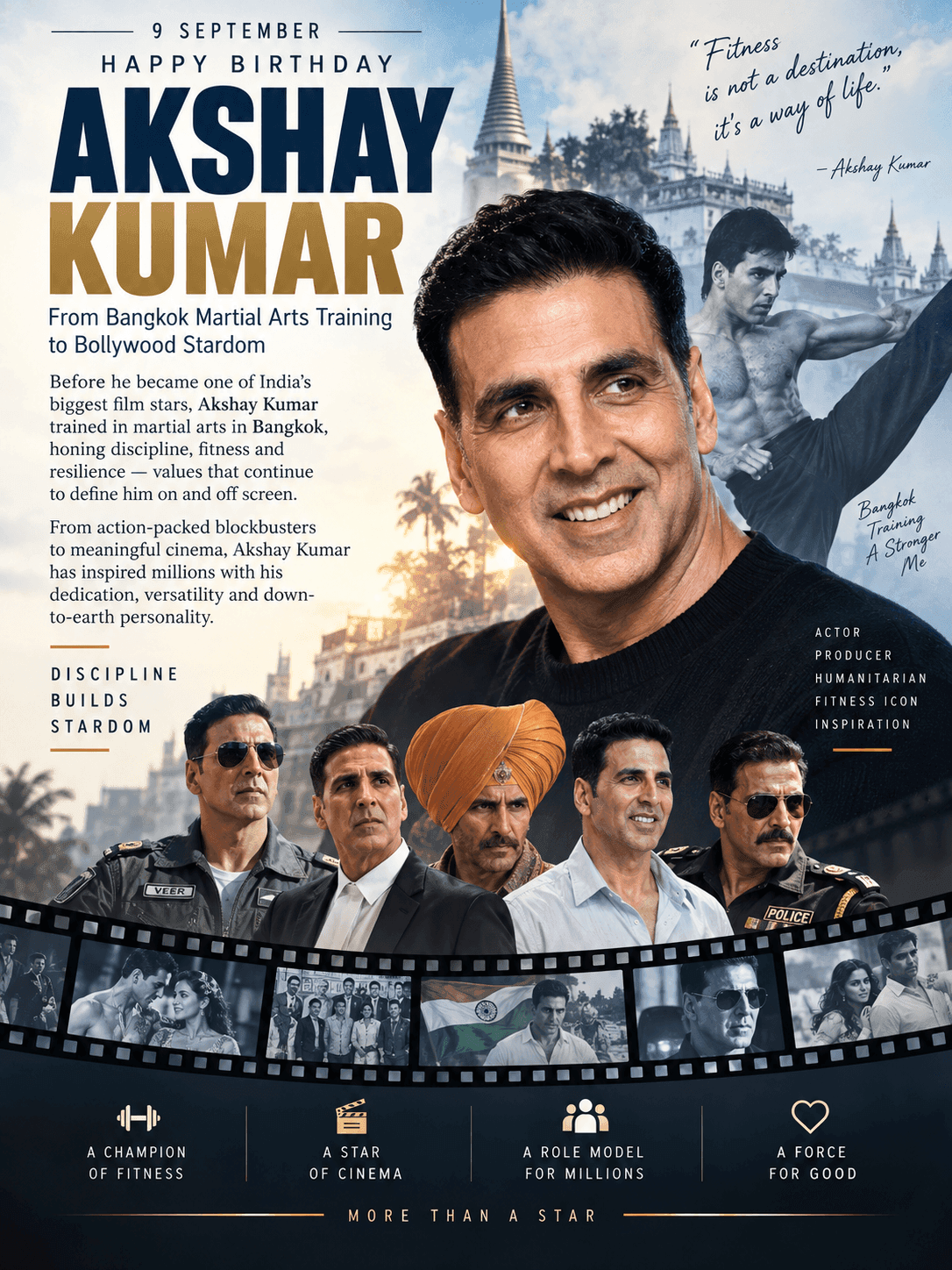
Long before Akshay Kumar became known for spectacular stunts and fast-paced Hindi films, his life was shaped by movement, discipline and the search for opportunity. Born Rajiv Hari Om Bhatia in Amritsar, Punjab, on September 9, 1967, he grew up in Delhi. His early years did not immediately point towards a career in cinema. Instead, martial arts became a defining influence and eventually opened an unexpected route into the film industry.
As a young man, Kumar travelled to Bangkok to study martial arts. During this period, he supported himself through ordinary jobs, including work as a chef and waiter. These experiences gave him a practical understanding of life outside the spotlight. After returning to India, he began working as a martial arts instructor. A student encouraged him to consider modelling, and that suggestion became an important turning point.
Modelling introduced Kumar to the world of cameras, advertisements and entertainment. From there, he began seeking opportunities in Hindi films. His acting debut came with Saugandh in 1991. The following year, Khiladi brought him wider recognition and established the action-oriented screen identity that would remain associated with him for many years. His agility, physical confidence and willingness to perform demanding sequences helped him stand apart in the crowded film landscape of the 1990s.
Kumar’s career, however, was not limited to action cinema. He gradually displayed an ability to move between comedy, romance, family drama and socially themed stories. Films such as Hera Pheri and its sequel showcased his comic timing, while projects including Aankhen, Namastey London, Bhool Bhulaiyaa, Special 26, Airlift and Rustom reflected different sides of his range. This variety helped him remain relevant as Hindi cinema changed its subjects, audiences and storytelling styles.
It is important to note that Kumar’s public image has been built not only around performance but also around consistency. He became known for maintaining a demanding working schedule and for bringing physical preparation to roles that required action or transformation. As a film producer, he also became involved in the broader process of creating cinema rather than appearing only in front of the camera. His career demonstrates how an actor can repeatedly reinvent his professional identity while retaining a recognisable connection with audiences.
Recognition followed this sustained contribution. Kumar received the Padma Shri in 2009, one of India’s prominent civilian honours. He later won the National Film Award for Best Actor for Rustom, acknowledging his work in a role that drew on restraint and dramatic intensity rather than action alone. These honours placed his popular success within a larger national conversation about achievement in Indian cinema.
Throughout history, entertainers who remain connected with family audiences often become part of everyday memory: their films are watched during holidays, discussed across generations and remembered through favourite scenes. Akshay Kumar’s journey from martial arts training and modest employment to enduring Bollywood stardom carries that wider significance. In conclusion, his birth anniversary is a chance to remember a career built on adaptability, discipline and persistence—qualities that continue to resonate with Indian families and the country’s evolving cinematic heritage.