
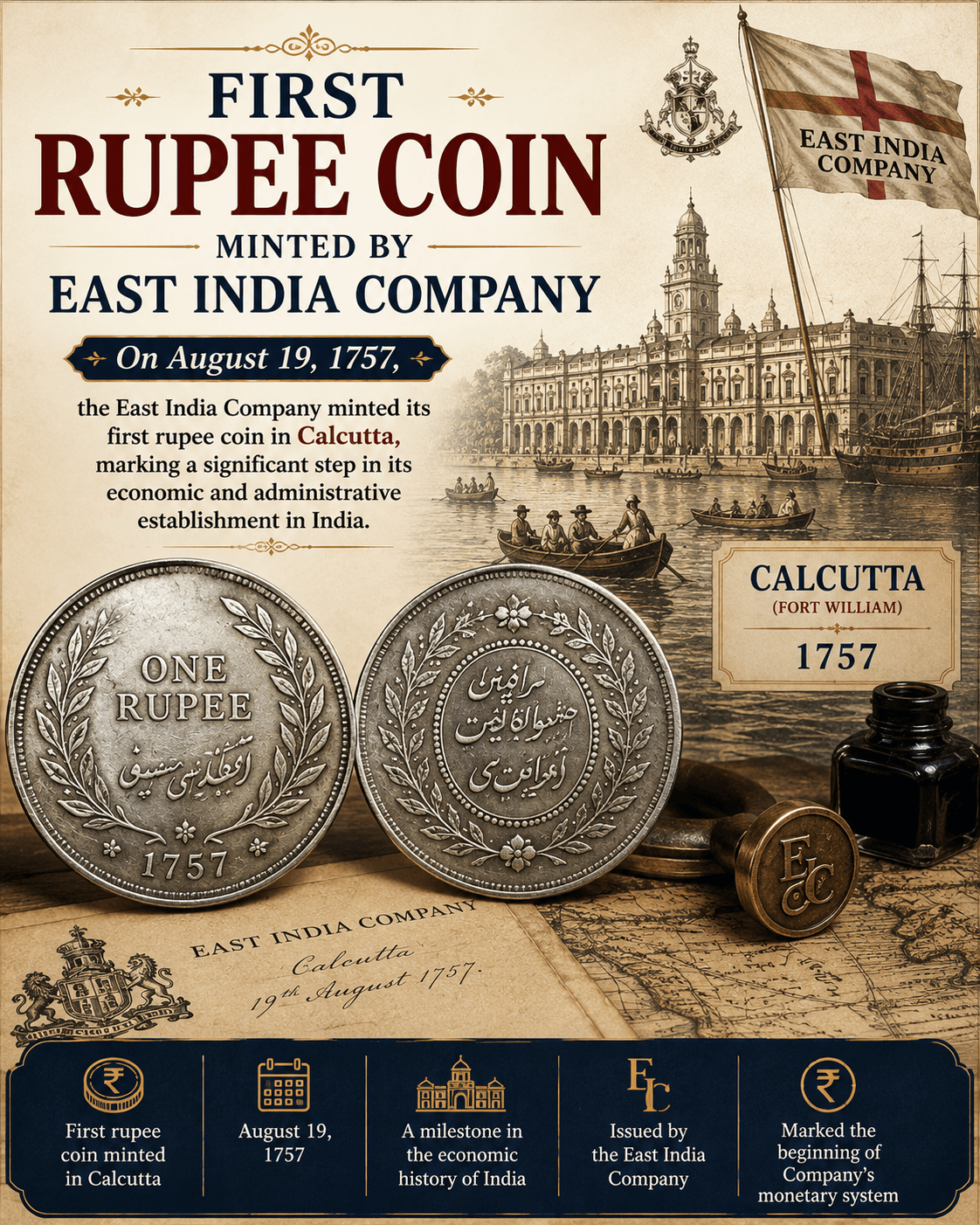
The First Rupee Coin: A Milestone in India’s Monetary History
In the mid-18th century, India was a tapestry of diverse cultures, languages, and currencies. The East India Company, a British trading entity, had established its presence in the subcontinent, primarily trading in silk, cotton, indigo dye, tea, and salt. However, the lack of a unified currency system posed challenges to trade and economic stability.
The Battle of Plassey in 1757 was a turning point, leading to the Company’s increased dominance in Bengal. Recognizing the need for a standardized currency, the East India Company, under a treaty with the Nawab of Bengal, established the Calcutta Mint. On August 19, 1757, the first rupee coin, known as the ‘sicca,’ was minted. This silver coin weighed approximately 11.66 grams and featured the Mughal Emperor’s name, reflecting the Company’s respect for existing traditions.
Prior to this, the Company had been sending gold and silver bullions to mints in Surat and Ahmedabad to be converted into coins. The establishment of the Calcutta Mint allowed for direct control over coin production, ensuring consistency and quality. The ‘sicca’ became the legal tender in the Bengal Presidency, facilitating smoother trade and economic transactions.
The design of the coin was a blend of British and Mughal influences. While the East India Company’s emblem was prominently displayed, the inscriptions were in Persian, the language of the Mughal court. This fusion symbolized the Company’s respect for local customs while asserting its authority.
The introduction of the rupee coin was not just a financial decision but also a strategic move. It was a testament to the Company’s growing power and its intent to integrate more deeply into India’s economic fabric. Over time, the rupee coin became a symbol of British rule, with its design evolving to reflect the changing political landscape.
In conclusion, the minting of the first rupee coin by the East India Company on August 19, 1757, was a pivotal event in India’s monetary history. It laid the foundation for the modern currency system and marked a significant chapter in the nation’s economic evolution. This remarkable story serves as a reminder of the intricate interplay between colonial powers and indigenous systems, shaping the financial heritage of India.