Phoolan Devi: From Bandit Queen to Parliamentarian
In the heart of Uttar Pradesh’s Jalaun district, amidst the winding rivers and arid lands, Phoolan Devi was born on August 10, 1963. Her family, belonging to the Mallah subcaste, faced the harsh realities of rural poverty. The Mallahs, traditionally fishermen, often found themselves at the bottom of the caste hierarchy, enduring societal discrimination and economic hardships.
Phoolan’s early life was marked by familial disputes over land, leading to her family’s marginalization within the village. At the tender age of 10, she took a stand against the injustice by consuming the chickpea crop that was rightfully hers. This act of defiance resulted in a brutal beating by her uncle’s son, Maiyadin, and further alienated her family from the community.
In an attempt to alleviate the family’s disgrace, Phoolan was married off to Puttilal, a man three times her age. The marriage was fraught with abuse, and after a brief period, she returned to her parents. However, societal pressures and familial expectations led her back to Puttilal, where she continued to face torment.
During this tumultuous period, Phoolan met Kailash, a man associated with local dacoits. Their relationship deepened, and she became involved with the dacoit community, learning the art of survival in a world governed by lawlessness. This association marked the beginning of her transformation from a victim to a formidable figure.
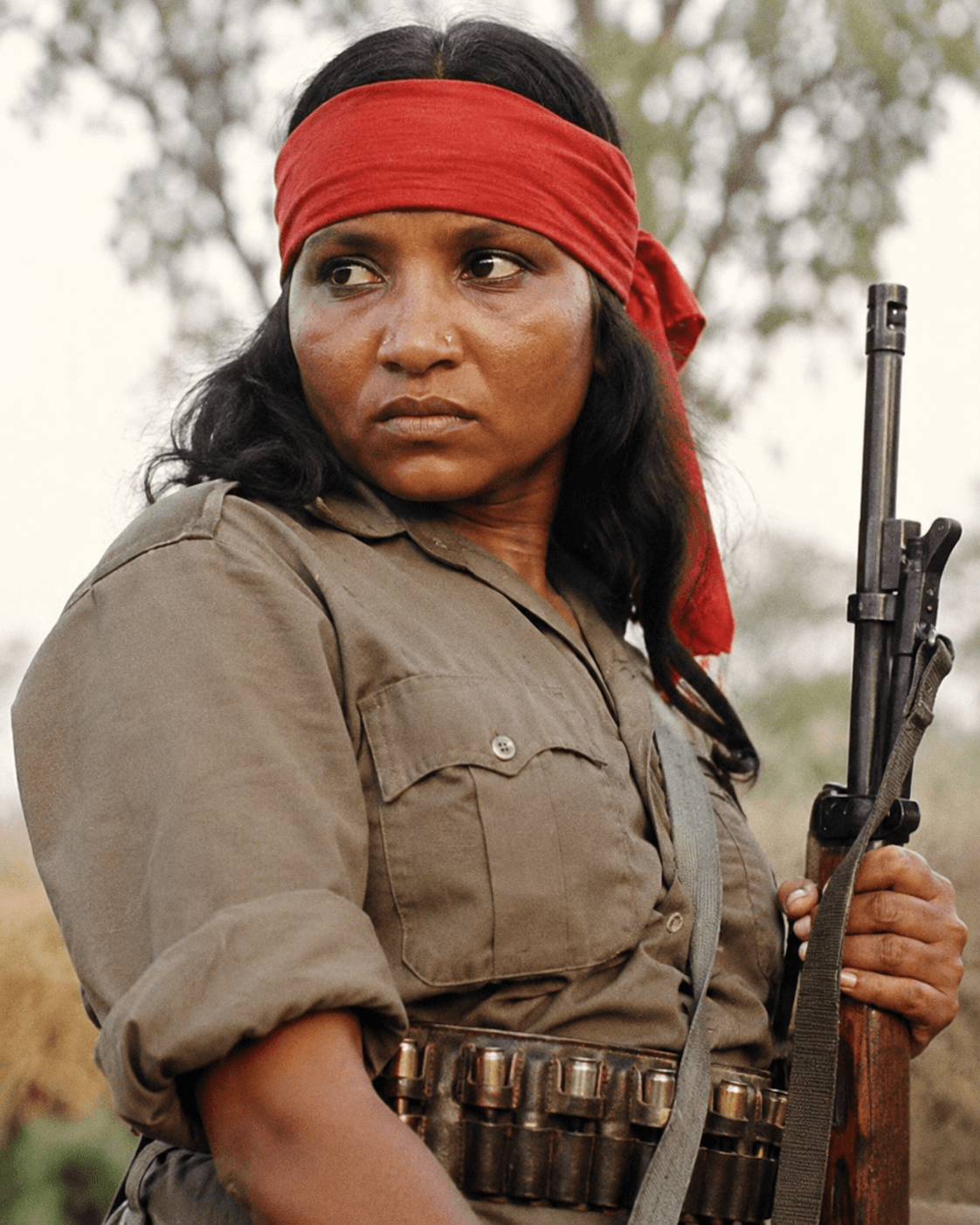
Tragedy struck when Kailash was killed by members of the Thakur community, leading to Phoolan’s abduction and subsequent gang rape. This harrowing experience ignited a fire within her, propelling her into a life of dacoity. She formed her own gang, targeting the Thakur villages that had wronged her, and became a symbol of vengeance and justice for the oppressed.
The 1981 Behmai massacre, where 22 Thakur men were killed, catapulted Phoolan into national and international prominence. The incident led to widespread media coverage, with some portraying her as a ruthless killer, while others viewed her as a Robin Hood figure. The Chief Minister of Uttar Pradesh resigned in the aftermath, and Phoolan became a fugitive, evading capture for two years.
In 1983, after extensive negotiations, Phoolan surrendered to the authorities. She spent 11 years in Gwalior prison, during which she learned to read and write, showcasing her resilience and determination. Her release in 1994 marked a new chapter in her life.
Embracing her newfound freedom, Phoolan entered the political arena, representing the Samajwadi Party. She was elected as a Member of Parliament in 1996, serving the Mirzapur constituency. Her tenure was marked by her advocacy for the marginalized and her unwavering commitment to social justice.
Phoolan’s life was immortalized in the 1994 film ‘Bandit Queen,’ which, despite its controversial portrayal, brought her story to a global audience. She also authored her autobiography, ‘I, Phoolan Devi,’ providing an intimate glimpse into her tumultuous journey.
On July 25, 2001, Phoolan Devi was assassinated outside her residence in New Delhi, a tragic end to a life that had traversed the extremes of human experience. Her legacy endures, serving as a beacon of hope and a testament to the resilience of the human spirit. Phoolan Devi’s story is a poignant reminder of the complexities of human nature and the transformative power of personal agency.
In today’s world, her journey continues to inspire those who face adversity, highlighting the importance of standing up against injustice and the potential for redemption and change. Phoolan Devi’s life is a testament to the enduring strength of the human spirit and the capacity for transformation, even in the face of overwhelming odds.