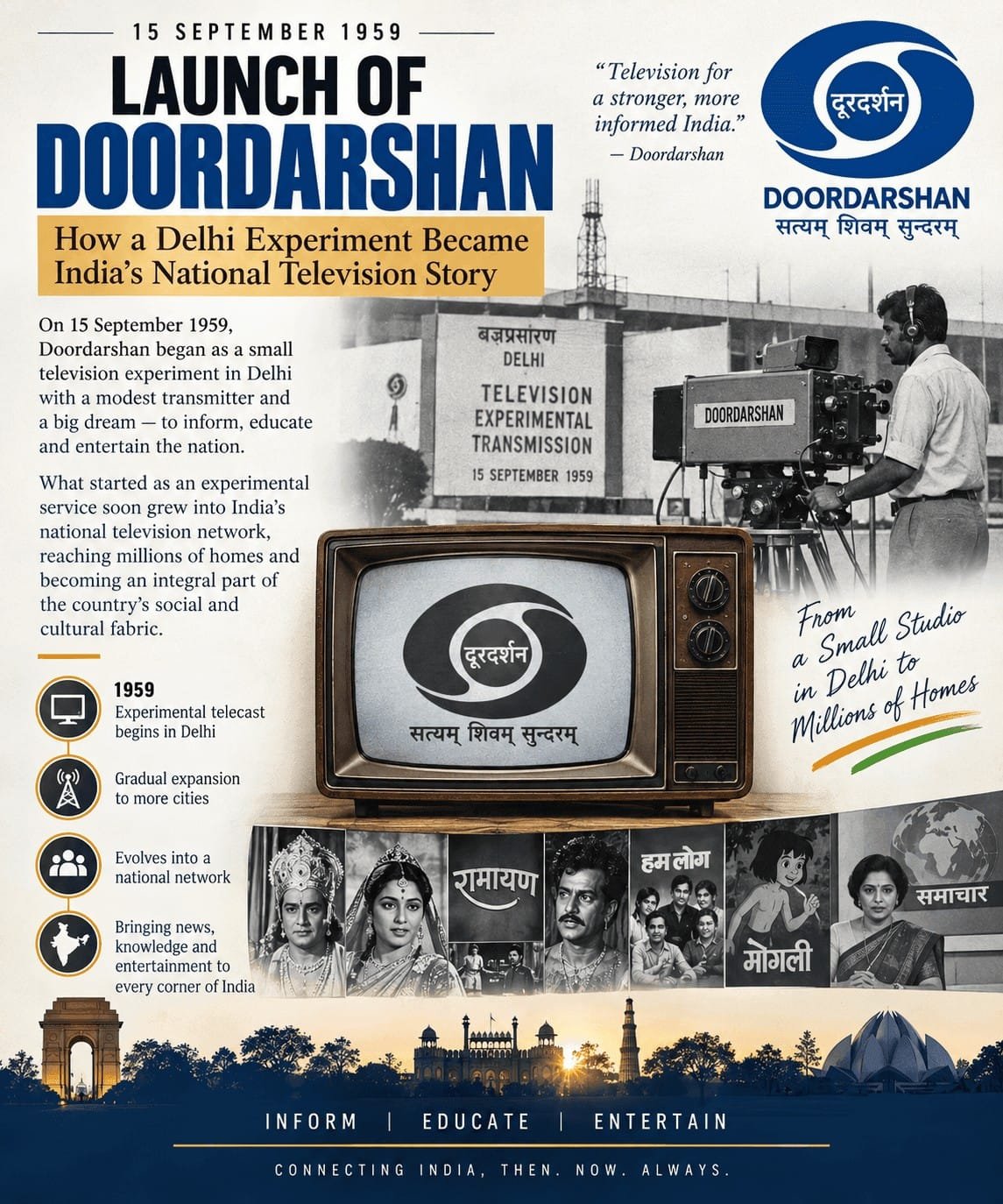
Launch of Doordarshan: How a Delhi Experiment Became India’s National Television Story
Before television became a familiar presence in Indian homes, it began as a modest experiment in Delhi. On September 15, 1959, Doordarshan started experimental television transmission, opening a new chapter in the country’s public communication and broadcasting history. The early service was limited in reach, but its significance extended far beyond the first screen images: it introduced the possibility of using television for education, information, culture and national connection. Over the decades, Doordarshan grew from a small experimental initiative into India’s national television service, becoming part of everyday family life through news, school programmes, cultural shows, sports and landmark national broadcasts. This story explores how the launch of Doordarshan reflected a young nation’s faith in technology and public service, and why that first transmission from Delhi still matters in India’s media heritage.