
The 1875 Family Tree That Became Evidence in Court
The 1875 Family Tree That Became Evidence in Court
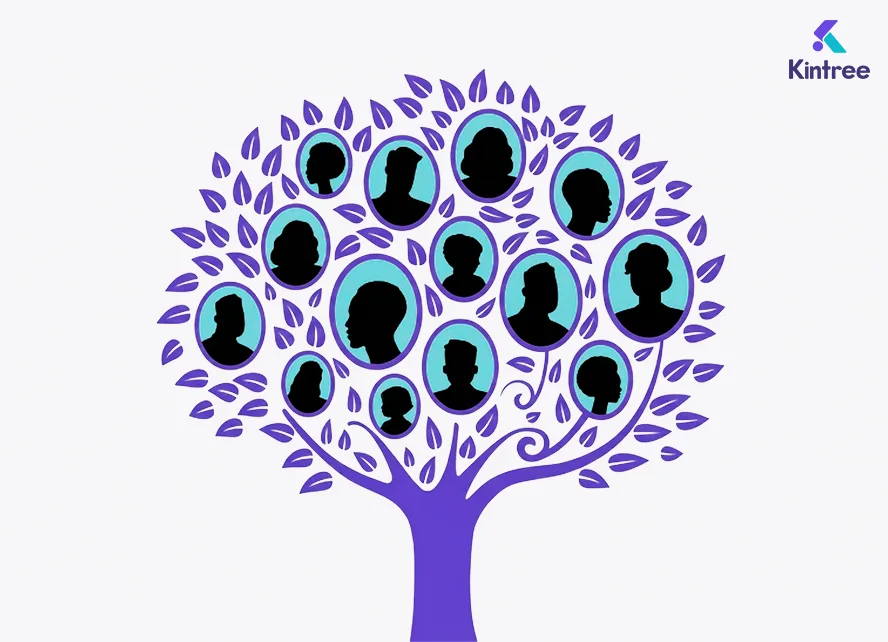
In 1875, Shah Nawaz Din sat down and recorded his family’s genealogy.
Names. Relationships. Generations. Biographical details.
Nothing particularly dramatic happened that day. There was no courtroom, no inheritance battle and certainly no reason to imagine that anyone would be scrutinising his work decades later.
But Shah Nawaz Din’s record survived.
And 55 years later, a court had a rather unusual use for it.
The Family Connection at the Centre of the Dispute
The case concerned the estate of Saleh-ud-Din. A group of plaintiffs claimed that they were his collateral relatives, descended from the same earlier family line and therefore had rights connected with his succession.
The opposing side disputed that relationship.
The plaintiffs traced their connection through several generations to Mohammad Muslim, the grandson of Qazi Rahim-ud-Din. Establishing that connection was crucial because the inheritance dispute depended partly on whether the plaintiffs could prove the family relationship they claimed.
So, the court faced a question that sounds simple until you try answering it generations later:
Who, exactly, was related to whom?
There was no convenient family database waiting to produce the answer.
There were people, memories and old records.
The Man Who Kept the Family Receipts
One of those records had been created by Shah Nawaz Din.
The judgment describes him as an enthusiastic student of genealogy. In 1875, he compiled an elaborate genealogical tree and added biographical notes based on what the court described as prolonged investigation and research.
That detail matters.
The document was created long before the litigation. Shah Nawaz Din was not apparently trying to win a case that did not yet exist. He was recording his understanding of the family’s history.
By the time the dispute reached court, he had been dead for decades.
His family tree, however, was still around.
And suddenly, something written as family history had acquired a very different job.
It had become evidence.
There Was More Than One Piece of Family History
The court also considered another document connected with the pedigree.
Ghulam Hussain, a member of the relevant family branch, had a document in his handwriting containing an expanded version of Shah Nawaz Din’s biographical notes.
That distinction is important. This was not simply two unrelated people independently drawing identical family trees.
Rather, the old genealogical information had been preserved and reproduced within the family.
Alongside these documents, the court heard oral evidence from people familiar with the family and its history.
Among them was a mirasi, a traditional custodian of family genealogies and histories whose knowledge of the family’s pedigree was considered as part of the evidence.
In other words, the court was reconstructing a family relationship using the things families have always used to remember themselves:
People who knew.
People who remembered.
And people who had bothered to write things down.
When an Old Family Tree Met the Law
The case eventually reached the Privy Council, which considered the pedigree evidence and the dispute over the applicable rules of succession.
The court examined whether statements made by deceased family members could help establish pedigree and considered the old genealogical material alongside the oral evidence.
Ultimately, the claimed collateral relationship was accepted and the original decree in favour of the plaintiffs was restored. The Privy Council also accepted the finding that customary law governed the succession in this family rather than Muslim law.
The remarkable part is not that an old document was found.
It is that the document had survived long enough to answer a question nobody had thought to ask when it was created.
Shah Nawaz Din was recording family history.
Decades later, a court was using that history to establish family relationships.
The Family History Problem Hasn’t Changed Much
The technology has changed. The problem hasn’t.
Families still divide their knowledge between people.
One person knows the names of the older generations. Someone else has the marriage records. Another relative has the photographs. Somebody remembers why two branches of the family are connected, while someone else knows the story behind an old surname.
The trouble begins when those pieces stop being connected.
A photograph can survive without its story. A document can survive without anyone knowing whose document it is. A name can remain in a family tree while the relationship behind it becomes uncertain.
That is the quieter way family history disappears.
Not all at once.
Piece by piece.
Why This Still Matters Today?
Shah Nawaz Din’s 1875 record offers a surprisingly modern lesson about genealogy.
The value of recording family relationships isn’t limited to satisfying curiosity about the past. A carefully preserved record can help future generations understand relationships that might otherwise become difficult to reconstruct.
Today, families have far more practical ways to do this.
A family tree can bring generations and relationships together, while photographs, documents, memories and stories can preserve the context around those names.
That is where Kintree becomes useful.
Rather than leaving family knowledge scattered between relatives, albums and old documents, families can create a shared record of their connections and the stories attached to them.
Shah Nawaz Din had a handwritten family tree.
He could not have known that it would one day matter in court.
But that is perhaps the most interesting thing about preserving family history: you rarely know which piece of it someone will need until much later.
FAQs
What was the 1875 family tree?
Shah Nawaz Din compiled an elaborate genealogical tree in 1875 and added biographical notes based on extensive research. The material later became part of the evidence in a dispute over family relationships and succession.
Why did the family tree matter in court?
The plaintiffs needed to establish that they were collateral relatives of Saleh-ud-Din. The old genealogical material helped the court assess the claimed relationship alongside oral testimony and other evidence.
What was the role of the mirasi?
The case included testimony from a mirasi, whose traditional role included preserving and reciting family histories and genealogies. His knowledge formed part of the evidence concerning the family’s pedigree.
What can families learn from this case?
Family relationships can become surprisingly difficult to reconstruct when the people who knew them are gone. Recording names, relationships, documents and family stories while that knowledge is still available can help preserve the connections between generations.
How can Kintree help preserve family history?
Kintree can help families organise their relationships alongside the stories, memories and information that give those relationships context, creating a shared record that can grow across generations.
This Blog is generated using information collected from various sources. Some details may be inaccurate, incomplete, or outdated. Please verify the information before relying on it.
Share This Story, Choose Your Platform!
Related Blogs
The 1875 Family Tree That Became Evidence in Court
In 1875, Shah Nawaz Din sat down and recorded his ....
APJ Abdul Kalam Family Tree: The Humble Roots Behind a Remarkable Legacy
Every year on October 15, India remembers Dr. A.P.....
Nana Patekar Beyond Cinema: His Family Tree, Roots and Relationships
Veteran actor Nana Patekar's passing on October 8,....
Sheikh Ahmed bin Rashid Al Maktoum: A Life Within the Al Maktoum Family Tree
When Sheikh Mohammed bin Rashid Al Maktoum became ....